
Quan Ba Heaven’s Gate is one of the first and most impressive stops on the Ha Giang Loop. Located at an altitude of over 1,500 meters, it offers a panoramic view of the entire Quan Ba Valley and its majestic limestone mountain ranges. With its year-round cool climate, drifting clouds, and the raw, untouched scenery of the rocky plateau, Heaven’s Gate has become an ideal check-in spot for motorbike travelers. In this article, Valor Ha Giang Loop will take a closer look at why Quan Ba Heaven’s Gate is a must-visit destination, especially for those who want to fully experience the grandeur of Ha Giang from the very beginning of their journey.
Where is Quan Ba Heaven’s Gate? A detailed guide on how to get there
Quan Ba Heaven’s Gate is located in Quan Ba District, Ha Giang Province, along National Highway 4C—the famous road that leads into the Dong Van Karst Plateau. Situated at an altitude of around 1,500 meters above sea level, this landmark is about 43 km from Ha Giang City and only around 3 km from Tam Son Town. It serves as the very first gateway welcoming travelers as they begin their Ha Giang Loop adventure.
To reach Heaven’s Gate, start from Ha Giang City and ride straight along National Highway 4C for approximately 44 km, heading up the Happiness Road. The route mainly consists of winding mountain passes, with towering cliffs on one side and deep valleys on the other, making the journey both challenging and exhilarating. Due to this distinctive terrain, motorbikes are considered the most suitable means of transportation, offering flexibility and a true sense of freedom while climbing passes and enjoying the scenery.
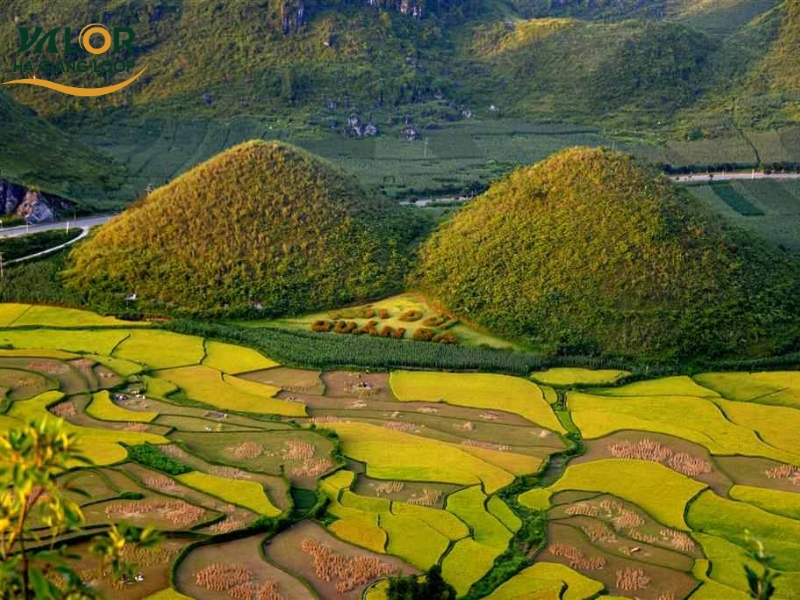
The road leading up to Quan Ba Heaven’s Gate, with winding mountain curves through rocky landscapes
When is the best time to visit the Quan Ba Heaven’s Gate?
Quan Ba Heaven’s Gate displays a beauty that changes with each season, so visitors can come at any time of the year and still experience its unique charm. However, certain periods allow you to fully admire the majesty and poetic scenery of the highland region. According to the experience of Valor Ha Giang Loop, August is considered the ideal time to visit the Heaven’s Gate. At this time, the sky is clear, gentle sunlight falls on the valley and golden rice fields, and white clouds drift slowly over the mountain peaks, creating a picture-perfect landscape.
From December to March, the valley below is covered with vibrant flowers, bringing a lively and colorful atmosphere to the highlands. If you love the colors of spring, this is a wonderful period to visit. Between April and May, the terraced fields begin to grow, covering the mountainsides with the soft and fresh beauty of young rice. By September, the rice harvest turns the entire valley into a stunning sea of golden yellow. Especially from October to November, the buckwheat flowers bloom, dressing the limestone plateau in a romantic purple-pink hue—a perfect season for photography enthusiasts that should not be missed.
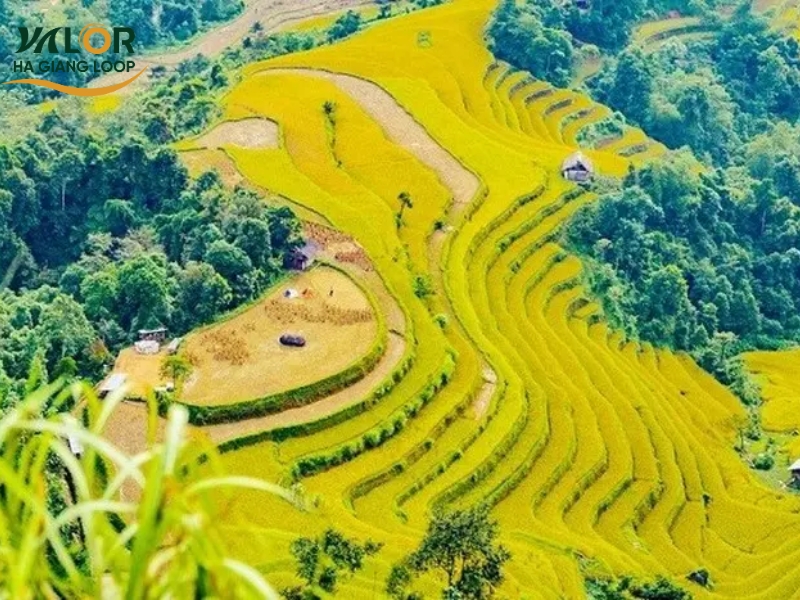
Quan Ba terraced fields with young rice in April, viewed from Heaven’s Gate
Beautiful attractions near Quan Ba Heaven’s Gate
Quan Ba Heaven’s Gate is one of the first and most impressive stops on the Ha Giang Loop. Situated at an altitude of over 1,500 meters, it opens the gateway to the Dong Van limestone plateau, where clouds merge with the mountains and the air carries the distinctive scent of the northern highlands. The majestic scenery here always makes visitors pause to admire it for a long while.
Thach Son Than – Guardian of the highland gateway
Thach Son Than is a massive rock with a unique shape, standing proudly amidst the mountains and forests. Located within the UNESCO Global Geopark, this site possesses a beauty that is both majestic and mystical, especially on mornings when mist blankets the valley. It is an ideal spot for photography and enjoying stunning sunsets along the Ha Giang Loop.
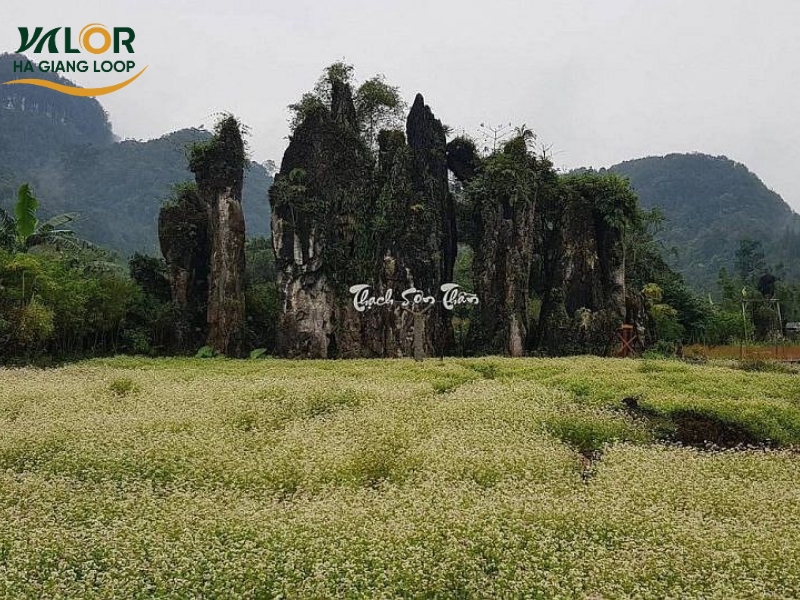
The gigantic Thach Son Than rock amidst the mountains and forests of Quan Ba
Lung Khuy Cave – The most beautiful cave in Hà Giang
Not far from Heaven’s Gate, Lung Khuy Cave impresses visitors with its dazzling stalactite formations, shaped over millions of years. The cave’s interior is spacious, cool, and possesses a rare, pristine beauty. The path leading to the cave winds through lush green hills, making the visit even more picturesque. It is one of the must-visit spots when exploring Quan Ba.
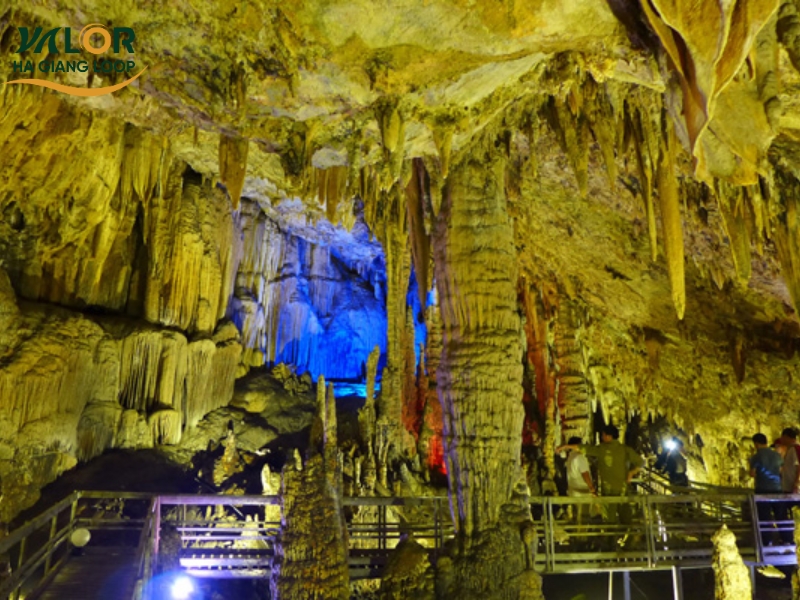
Dazzling stalactites in Lung Khuy Cave, Ha Giang
Bat Dai Son Cultural Village – Preserving the full beauty of the H’Mong people
Bat Dai Son is a traditional village tucked away among limestone mountains. The yellow rammed-earth houses, linen weaving looms, and colorful traditional attire create a cultural space that is distinctly H’Mong. Walking through the village, visitors can feel the slow, genuine, and rustic rhythm of life—a rare experience amid the rocky highlands.
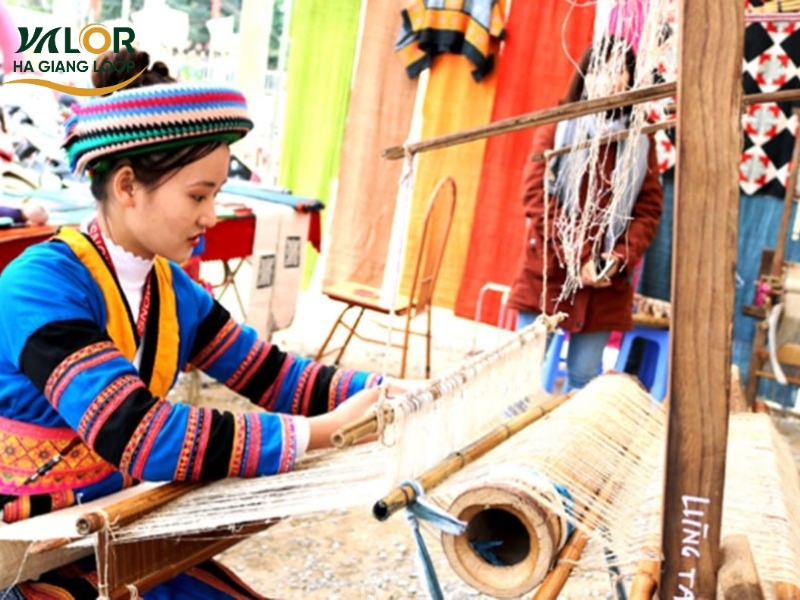
H’Mong people weaving linen in Bat Dai Son Cultural Village, Ha Giang
The Lonely Tree of Quan Ba – A cinematic check-in spot
The Lonely Tree stands alone amid vast hills, creating a serene and striking landscape. This spot is especially ideal for photography at sunrise or sunset, when the light bathes the valley in golden hues. Its dreamy scenery makes it a favorite stop for motorbike travelers and photography enthusiasts.
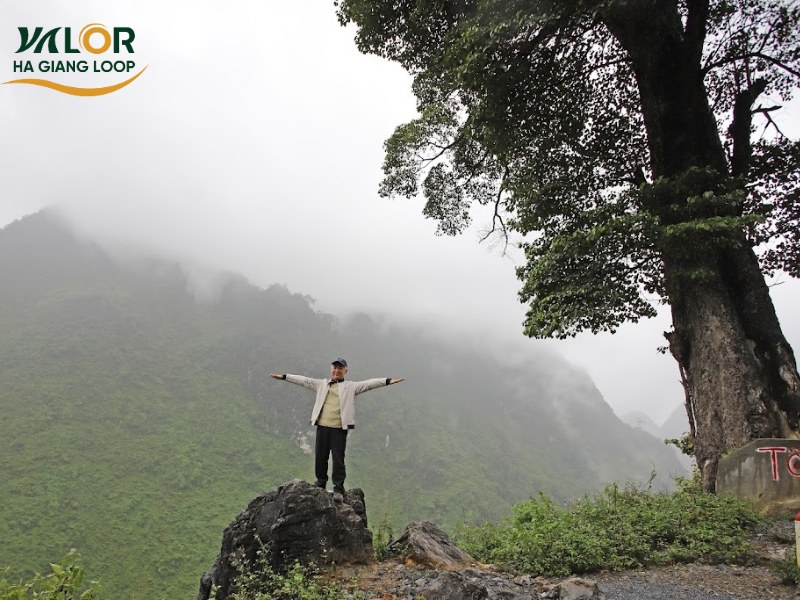
The Lonely Tree check-in spot amidst the mountains and forests of Ha Giang
Tam Son Town – A panoramic view of the stunning Twin Mountains
Tam Son is a small town located at the foot of Heaven’s Gate, featuring cafés with panoramic views of the Twin Mountains and Quan Ba Valley. In the morning, the town is shrouded in white mist, while in the afternoon, golden sunlight filters through the rooftops, creating a peaceful scene. It is an ideal resting spot before continuing your journey to Dong Van and Meo Vac.
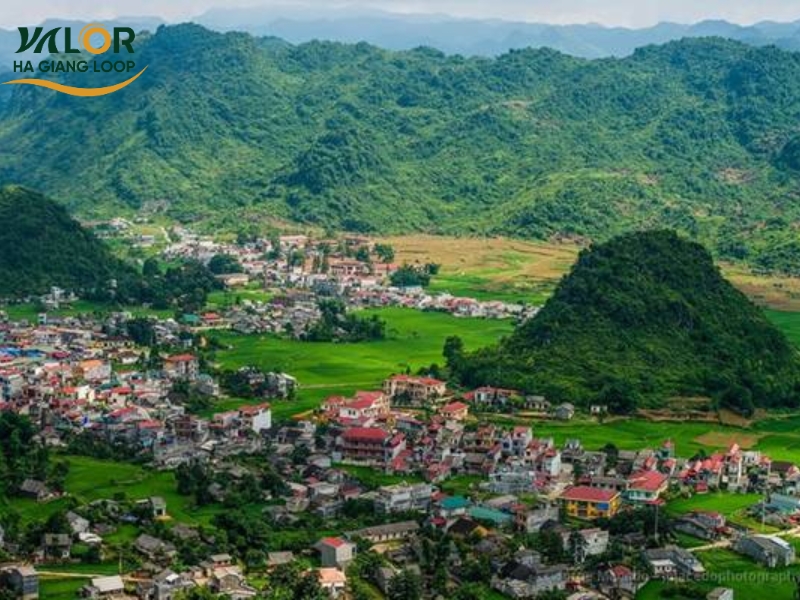
Tam Son Town viewed from above, with a view of the Twin Mountains in Quan Ba
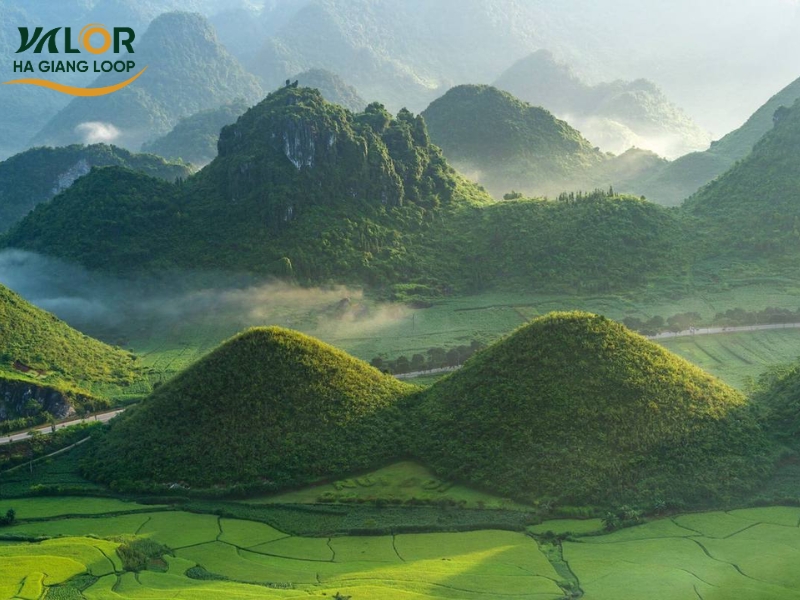
Twin Mountains of Quan Ba – A unique symbol of the limestone region
Right below Heaven’s Gate are the Twin Mountains – a famous scenic spot known for their smooth, harmonious shapes amidst the pristine mountainous landscape. The Twin Mountains are at their most beautiful during the rice harvest season (September–October), when the entire valley turns golden, or in spring when peach and mustard flowers bloom simultaneously. This is one of the most popular viewpoints for travelers exploring Quan Ba.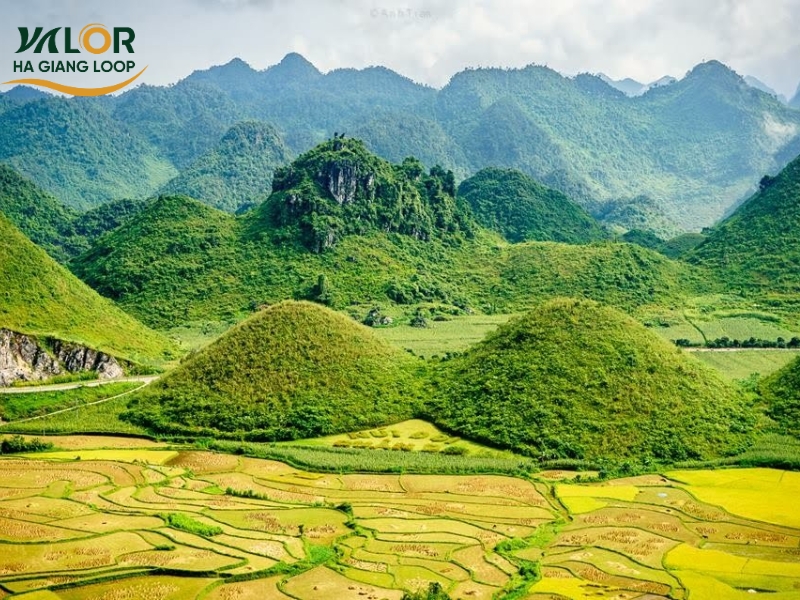
Quan Ba Highland Market
Quyet Tien Market is a famous market in Quan Ba, held every Sunday, showcasing the vibrant culture of the highland communities. Visitors can find a variety of local products such as seasonal vegetables, handmade brocade, corn wine, thang co, mèn mén, and other mountain specialties. The busiest time is from 6:00 to 9:00 a.m., when people from surrounding villages gather to trade, socialize, and connect.
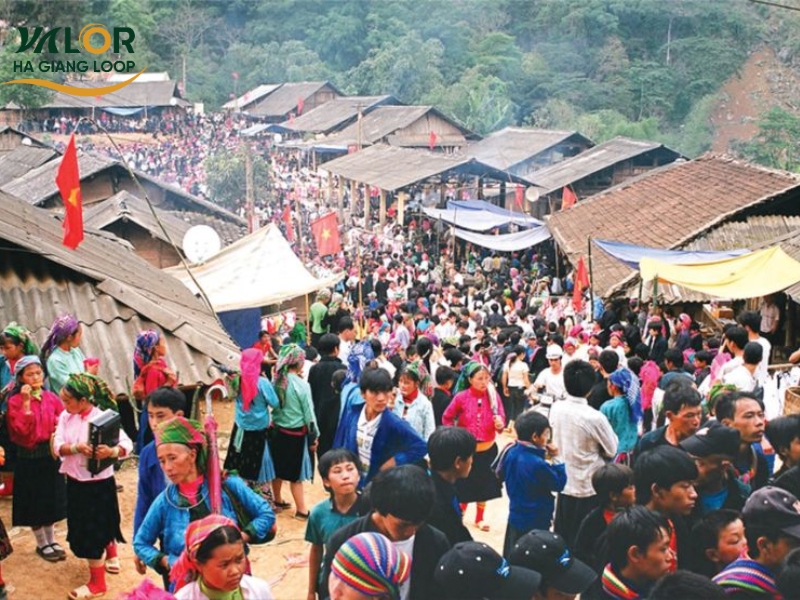
Quyet Tien Market in Quan Ba bustling on Sunday morning
Things to keep in mind when visiting Quan Ba Pass
To make your visit to Quan Ba Heaven’s Gate more complete and safe, travelers should keep in mind several important points before starting the journey. The terrain here mainly consists of high mountain passes, and the weather changes quickly, so thorough preparation is essential.
- Check the weather before setting off: Fog, heavy rain, or high humidity can make roads slippery and reduce visibility. Prioritize clear days with mild sunshine. The best time of day to visit is between 10:00 a.m. and 2:00 p.m., when the fog has lifted and the mountain scenery is most visible.
- Wear clothing suitable for high-altitude terrain: Heaven’s Gate is located at around 1,500 meters above sea level, so the weather is often cold and windy. Wear warm clothes and sport or trekking shoes for easier movement. Avoid high heels, as the roads are steep and rocky.
- Bring water and snacks: Climbing and exploring can be physically demanding. Carry a small bottle of water and some snacks to maintain energy for the journey.
- Enjoy local cuisine: When visiting Quan Ba, be sure to try colorful, fragrant five-color sticky rice (xôi ngũ sắc), men men—a traditional H’Mong dish, thang co—a highland specialty, and thang den—a rustic yet energy-rich local food.
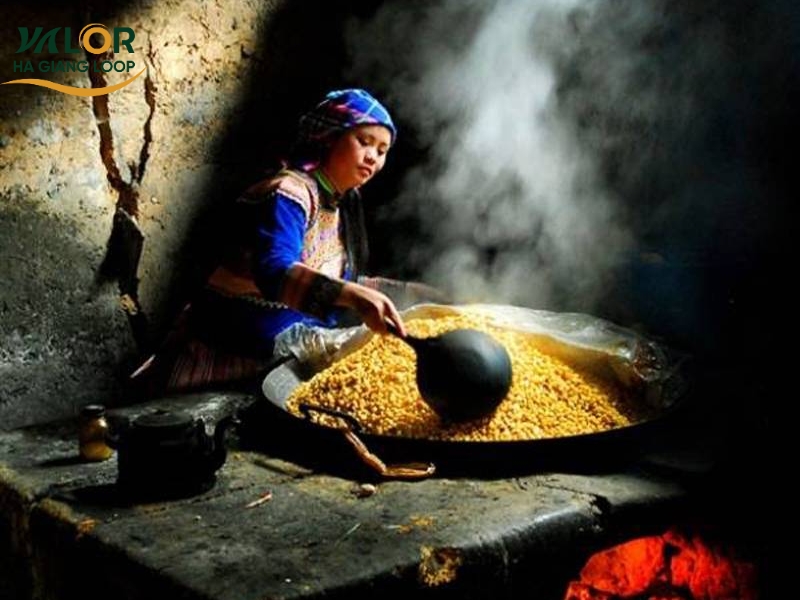
Local cuisine of Quan Ba, such as men men and thang co
In this article, Valor Ha Giang Loop has provided comprehensive information and highlighted experiences at Quan Ba Heaven’s Gate, one of the most impressive stops on the Ha Giang Loop journey. From its location, directions, and the best time to visit, to the majestic natural scenery, local cultural life, and nearby attractions, we hope travelers gain a complete and clear understanding before beginning their exploration of this remarkable destination.