If you’re planning to ride Vietnam’s most famous motorbike route, you’re probably asking: How hard is Ha Giang Loop? Known for its dramatic mountain passes, sharp hairpin turns, and changing weather conditions, the Ha Giang Loop can be both thrilling and challenging especially for beginners. In this complete difficulty guide, Valor Ha Giang Loop breaks down the road conditions, riding skills required, seasonal factors, and safety tips to help you decide whether the Ha Giang Loop is right for your experience level and how to prepare for a safer, more enjoyable adventure.
Introduction to the Ha Giang Loop Route
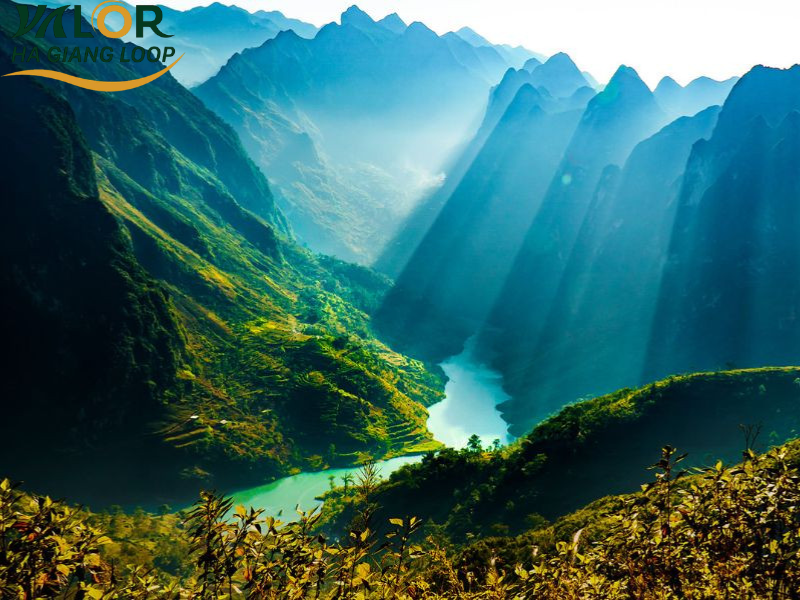
The Ha Giang Loop is one of the most spectacular and challenging motorbike routes in Vietnam, stretching over 350 kilometers along the northern border region. This journey takes travelers across majestic limestone mountains, lush valleys, ethnic minority villages, and winding high mountain passes often wrapped in clouds.
The terrain along the Ha Giang Loop changes constantly, sometimes within just a few dozen kilometers. Riders will encounter steep slopes, consecutive hairpin turns, narrow cliffside roads without guardrails, and a wide variety of road surfaces from smooth asphalt to gravel and rough dirt tracks. In addition, mountain weather can shift rapidly, from bright sunshine to thick fog or sudden rain showers.
Throughout the journey, it’s common to come across free-roaming livestock or local villagers crossing the road, especially near rural communities. Blind corners and sharp ascents require strong focus and confident riding skills.
Although this route is undeniably challenging, these very elements are what make the Ha Giang Loop so captivating. With proper physical and mental preparation, the journey offers an unforgettable adventure suitable for beginners (with guidance) as well as experienced riders.
Explore Tour at Valor
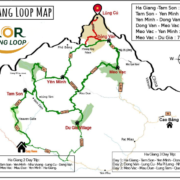
Difficulty by Section of the Ha Giang Loop
The Ha Giang Loop does not have a uniform level of difficulty from start to finish. Each section features different terrain, varying levels of challenge, and requires different riding skills. Understanding each segment will help you prepare physically and mentally, and decide whether to ride independently or travel with a local driver.
Ha Giang – Quan Ba (Bac Sum Pass & Heaven’s Gate)
- Difficulty: Moderate
- Distance: ~50 km
- Terrain: Well-paved road, gentle slopes, many winding curves
- Highlights: Bac Sum Pass, Quan Ba Heaven’s Gate, Tam Son Town
This is an ideal warm-up section for the journey. The slopes are not overly steep, and the road surface is relatively stable, allowing riders to gradually adapt to mountain riding conditions. However, fog often appears in the early morning or late afternoon, which can significantly reduce visibility. This stretch is suitable for beginners, but riders should still maintain a steady speed and remain cautious on the continuous curves.
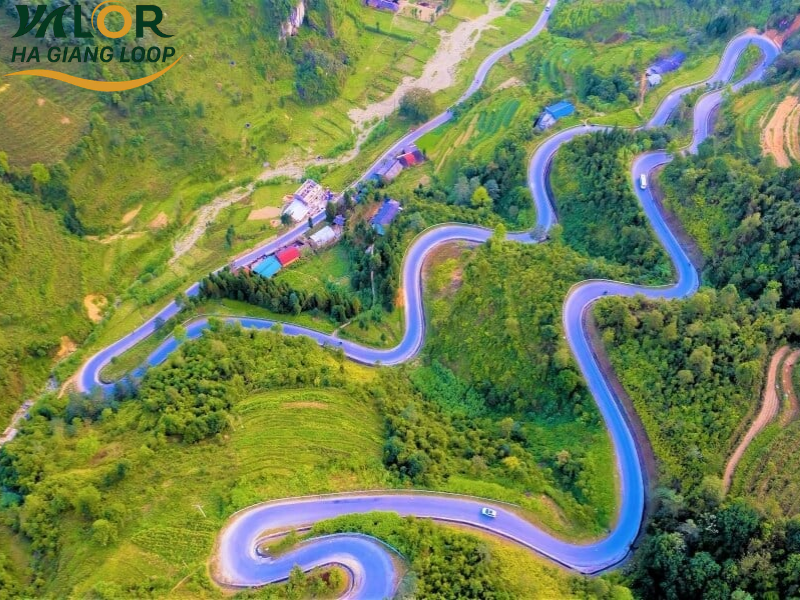
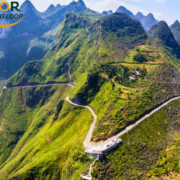
Bac Sum Pass viewed from above in Ha Giang
Quan Ba – Yen Minh
- Difficulty: Moderate to Difficult
- Distance: ~40 km
- Terrain: A mix of paved and gravel roads, sharp bends, increasing elevation
- Highlights: Tam Son Market, Lung Khuy Cave
This section becomes more challenging, with narrower curves and occasional uneven road surfaces. Elevation changes more abruptly, and the road may feel tighter compared to the first stage. Riders need good brake control, maintain safe distances, and stay highly focused especially when encountering oncoming vehicles along narrow stretches. This segment requires solid basic riding skills and confidence in handling mountain roads.

Yen Minh – Dong Van (via Tham Ma Pass)
- Difficulty: Difficult
- Distance: ~45 km
- Terrain: Winding roads, steep inclines, sections of rough and rocky surface
- Highlights: Tham Ma Pass, H’Mong King’s Palace, Sung La Village
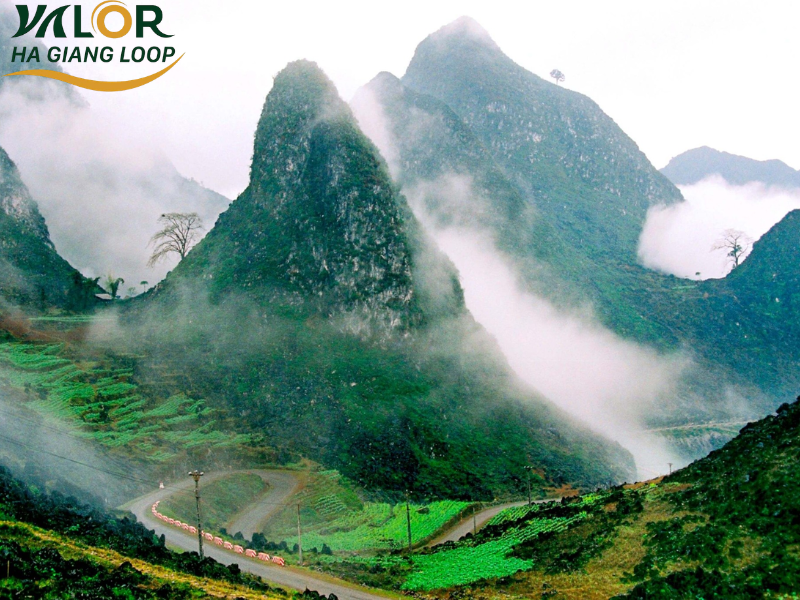
Tham Ma Pass marks the point where the true difficulty of the Ha Giang Loop becomes evident. Riders must navigate consecutive tight hairpin turns, uneven road surfaces, and occasional trucks or buses that may appear suddenly around blind corners. This section tests your confidence, balance, and speed control on mountain terrain. Despite the challenge, the scenery around Sung La Valley and Dong Van is absolutely breathtaking, making every effort worthwhile.
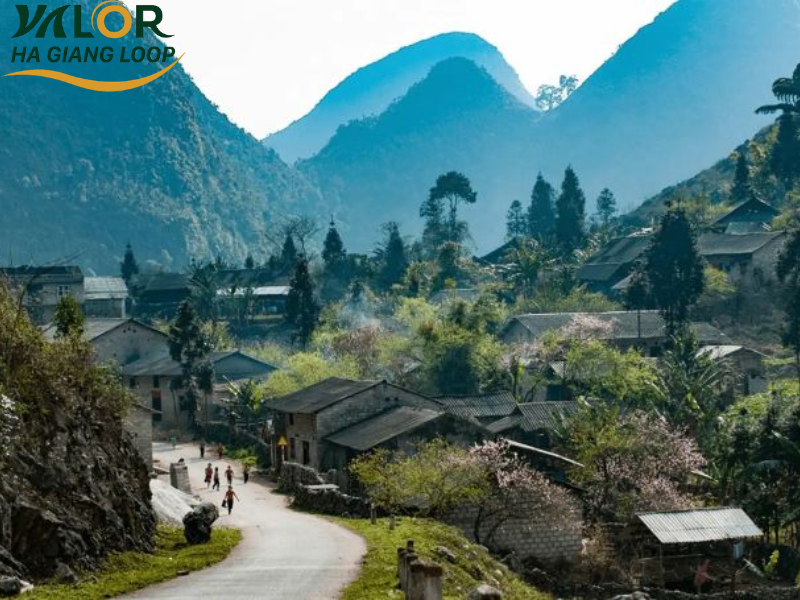
Sung La Village in the rocky plateau valley of Ha Giang
Dong Van – Meo Vac (via Ma Pi Leng Pass)
- Difficulty: Advanced
- Distance: ~22 km
- Terrain: Extremely narrow and winding roads, steep cliff edges, limited guardrails
- Highlights: Ma Pi Leng Pass, Skywalk viewpoint, Tu San Canyon
This is the most famous and most dangerous section of the entire Ha Giang Loop. The road clings to the mountainside, with towering rock walls on one side and deep valleys on the other. Even a small mistake can have serious consequences. Beginners are strongly advised not to ride this stretch alone. Traveling with an experienced local driver or guide significantly improves safety. If you complete this section successfully, you’ll be rewarded with some of the most breathtaking scenery of the entire journey.
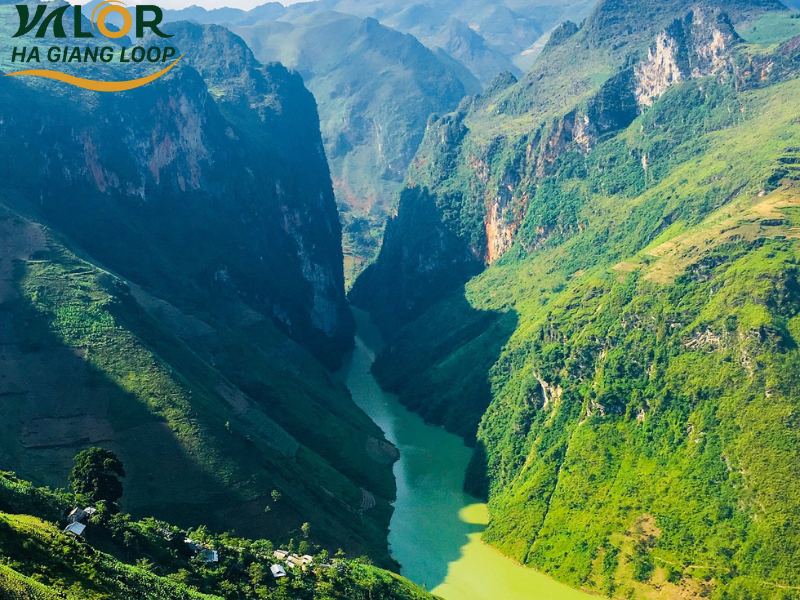
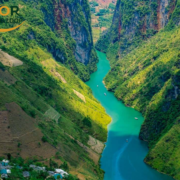
Ma Pi Leng Pass overlooking the emerald Nho Que River
Meo Vac – Du Gia
- Difficulty: Moderate to Difficult
- Distance: ~70 km
- Terrain: Mixed surfaces including gravel, dirt roads, and moderate slopes
- Highlights: M Pass, Lung Ho viewpoint, Du Gia Waterfall
This is a longer stretch with a more rural and remote feel. Some gravel and dirt sections can become slippery, especially after rain. Riders need to stay adaptable, control their speed carefully, and be prepared for changing road conditions. Du Gia is a favorite overnight stop for many travelers, offering a peaceful atmosphere, traditional local meals, and an authentic cultural experience after the more intense mountain sections.
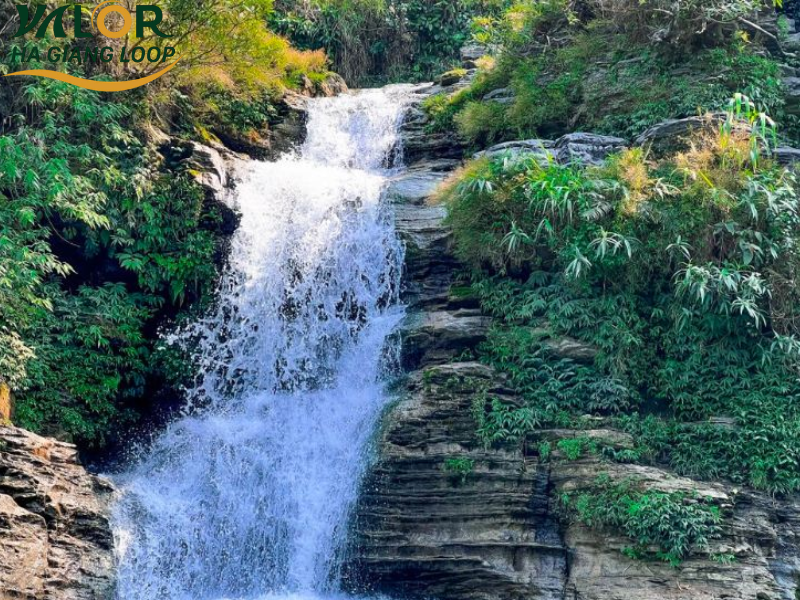
Du Gia Waterfall surrounded by the mountains of Ha Giang
Du Gia – Ha Giang (via Lung Tam)
- Difficulty: Moderate
- Distance: ~80 km
- Terrain: Gentle slopes, mostly paved roads
- Highlights: Lung Tam weaving village, Quan Ba Twin Mountains
The final stretch is more relaxed, allowing riders to unwind and recover after the more demanding sections of the loop. The road surface is generally stable and requires fewer technical riding skills compared to earlier mountain passes. This segment offers a smooth and enjoyable conclusion to the journey, giving you time to reflect on the adventure while passing scenic landscapes on the way back to Ha Giang City.
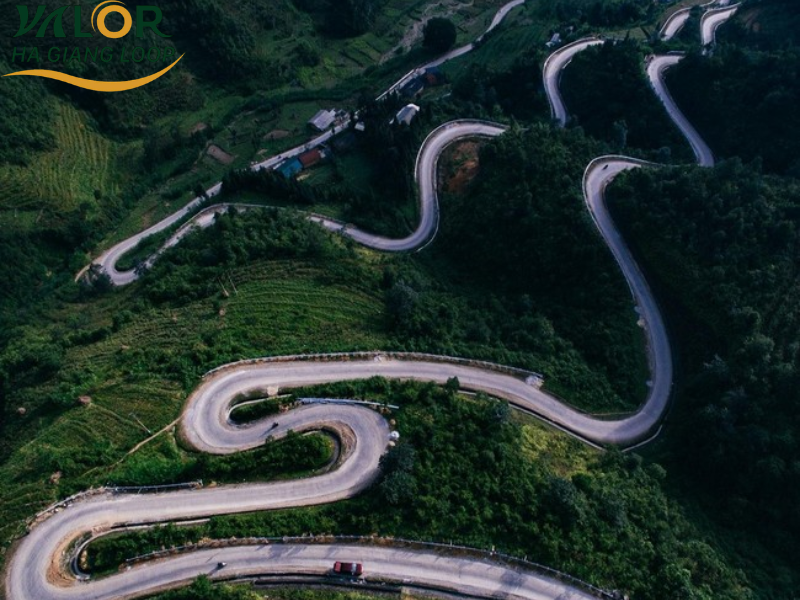
Gentle paved road from Du Gia back to Ha Giang
Important Things to Keep in Mind When Riding the Ha Giang Loop
The Ha Giang Loop is one of the most beautiful yet challenging motorbike routes in Vietnam. To ensure your journey is safe and rewarding, keep the following important points in mind:
- Assess your riding skills honestly: The loop includes tight hairpin turns, steep mountain passes, and narrow cliffside roads. If you lack mountain riding experience, consider traveling with a local Easy Rider instead of riding solo. Don’t underestimate the difficulty of the route.
- Inspect your motorbike carefully before departure: Make sure the brakes function properly, tires are well-inflated and not overly worn, headlights and taillights work correctly, and mirrors are intact. A well-maintained bike significantly reduces risks on mountain roads.
- Monitor the weather regularly: Weather in Ha Giang can change quickly, especially on high passes. Thick fog, heavy rain, and slippery roads may appear unexpectedly. Always check the forecast before each stage and avoid riding at night unless necessary.
- Carry valid documents: If riding independently, bring a valid driving license, identification, and any required vehicle documents. Riding without proper documentation may result in fines or police checks.
- Refuel in time and carry cash: Gas stations can be far apart in some sections, so refuel when your tank reaches about half. Many rural areas do not accept card payments, so carrying sufficient cash is essential.
- Respect local culture: Ha Giang is home to 22 ethnic minority groups. When visiting villages, ask permission before taking photos, dress respectfully, and be mindful of local customs to ensure a positive cultural experience.
- Plan your itinerary wisely and avoid exhaustion: Total riding time can reach 11–12 hours for the full loop. Do not rush the journey. Take regular breaks, stay hydrated, and avoid riding when tired.
The Ha Giang Loop is not an easy ride, but its difficulty is part of its unique appeal. From the winding curves of Tham Ma Pass to the dramatic heights of Ma Pi Leng, each segment demands focus, skill, and preparation. With proper planning, realistic self-assessment, and strict attention to safety, the Ha Giang Loop is absolutely achievable even for beginners when guided appropriately.
See more: